
|

| Place of Origin: | China |
| Brand Name: | Xinland |
| Certification: | CE |
Medical professionals working close to fluoroscopy and X-ray imaging systems may be exposed to occupational scatter radiation around the head and eye area during repeated procedures.
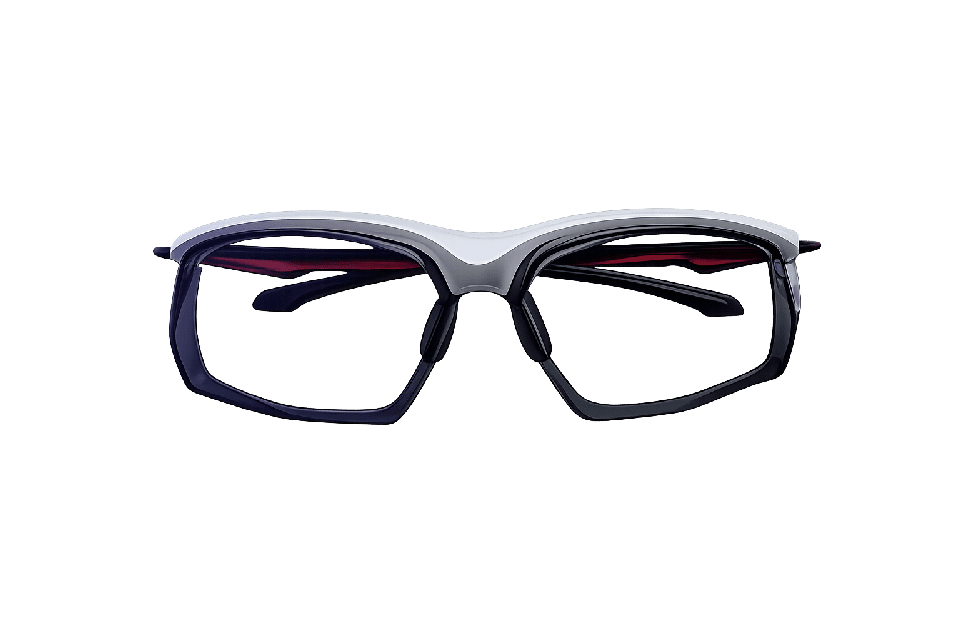
These interventional X-ray safety glasses are designed to provide an additional protective barrier around the eyes while maintaining the transparent vision required for clinical work.
The eyewear uses transparent lead-glass lenses and is available with 0.5 mmPb or 0.75 mmPb front-lens lead equivalency, allowing hospitals, radiation-safety departments and medical distributors to select a configuration according to their internal protection requirements.
| Buyer Requirement | Product Solution |
|---|---|
| Radiation shielding around the eyes | Transparent lead-glass lenses |
| Different protection specifications | 0.5 mmPb / 0.75 mmPb options |
| Clinical visibility | Clear, transparent lens construction |
| Additional lateral coverage | Side-protection configurations available |
| Institutional purchasing | Bulk and project-based supply |
| Private-label programs | Frame, branding and packaging customization |
Suitable Buyers: Hospitals · Cath Labs · Imaging Centers · Medical Distributors · Radiation Safety Suppliers · OEM Projects
Interventional physicians and supporting staff may work relatively close to patients and fluoroscopy equipment during procedures. Scatter radiation can reach the eye area repeatedly over the course of clinical work.
Our Solution
Lead-glass lenses provide a transparent shielding layer in front of the eyes. Buyers can select 0.5 mmPb or 0.75 mmPb lead-equivalent lenses according to the protection specification established by their facility or procurement program.
Medical personnel still need to observe patients, imaging monitors, instruments and the surrounding procedure area while wearing radiation-protective eyewear.
Our Solution
Transparent lead glass combines radiation attenuation with optical visibility, providing a more practical solution for clinical environments than opaque shielding materials.
The eyewear is intended to support normal visual tasks while adding an additional radiation-protection barrier around the eye area.
Front-lens protection is only one part of an eyewear protection system. Operator position, head angle, frame geometry and lateral radiation scatter may also influence eye-area exposure.
Our Solution
Side-protection configurations can be supplied or discussed according to the selected model and project requirements.
For applications where lateral scatter is an important consideration, buyers should evaluate both the stated front-lens Pb equivalency and the overall coverage provided by the frame and side shields.
| Specification | Details |
|---|---|
| Product Type | Interventional X-Ray Protective Eyewear |
| Lens Material | Transparent High-Lead Glass |
| Lens Appearance | Colorless / Transparent |
| Front Lead Equivalency | 0.5 mmPb / 0.75 mmPb |
| Protection Area | Eye / Eye-Lens Area |
| Side Protection | Available according to configuration |
| Primary Environment | Medical X-Ray & Fluoroscopy Workflows |
| Product Format | Reusable Professional Protective Eyewear |
| Typical Users | Medical & Imaging Professionals |
| Buyer Type | Hospitals, Distributors, OEM & Bulk Procurement |
| Customization | Frame, side coverage, color, branding and packaging subject to project requirements |
Technical Note:
The stated mmPb value represents lead equivalency under defined radiation test conditions. It should not be interpreted as the actual physical thickness of the lens.
Choose between 0.5 mmPb and 0.75 mmPb front-lens configurations according to your institution's radiation-protection specification and intended application.
This gives procurement teams greater flexibility than a product offered with only one fixed shielding specification.
The clear lead-glass construction is designed to combine X-ray attenuation with the visibility required for professional clinical work.
Users can continue viewing monitors, patients and instruments without relying on an opaque protective barrier.
The eyewear format provides front eye-area coverage suitable for medical personnel working around X-ray and fluoroscopy equipment.
Where additional lateral coverage is required, compatible side-protection configurations can be evaluated.
The eyewear is intended for repeated professional use when correctly handled, cleaned, inspected and stored.
Frames, hinges and lenses should be checked regularly for visible damage or deformation that could affect fit or coverage.
Hospitals and distributors can discuss project-specific requirements including frame selection, shielding configuration, side protection, frame colors and accessories.
For distributors and radiation-protection brands, project customization may include:
Logo Branding · Frame Selection · Color Options · Product Labels · User Manuals · Individual Packaging · Bulk Packaging · Private-Label Programs
Suitable for interventional radiologists and clinical teams working around fluoroscopy-guided diagnostic and therapeutic procedures where occupational scatter radiation may be present.
A practical eye-protection option for cardiologists, technicians and supporting personnel working in catheterization laboratories and fluoroscopy-based cardiovascular procedures.
Can be incorporated into radiation-protection programs for trained professionals working near fluoroscopy equipment during applicable surgical procedures.
Suitable for clinical environments where personnel may spend extended periods near X-ray imaging systems during vascular or electrophysiology workflows.
Can be supplied as part of institutional PPE programs for personnel working around diagnostic X-ray and related imaging equipment.
Suitable for hospital purchasing programs, radiation-safety departments, healthcare suppliers and medical equipment distributors requiring reusable professional radiation-protective eyewear.
Important: Radiation-protective glasses should be used as one component of a broader radiation-safety program together with appropriate distance, shielding, dosimetry, protective garments and other controls required by the facility.
For institutional procurement, the most important shielding specification is the stated lead equivalency of the protective lenses.
Buyers requiring technical documentation should confirm that the applicable test report corresponds to the exact 0.5 mmPb or 0.75 mmPb configuration being purchased.
Depending on the agreed purchase specification, inspection can cover:
lead-glass lens specification
lens surface condition
optical appearance
lens-to-frame assembly
frame model
hinge operation
side-protection configuration
labeling
accessories
packaging
For B2B and bulk orders, finished goods can be checked against the confirmed purchase specification before packing and shipment.
For tender projects or large institutional orders, customers should provide any required inspection checklist before production.
Certification and documentation requirements may vary according to the exact product configuration, destination country and procurement channel.
If your hospital tender, distributor registration or local market requires specific compliance documents, please provide your documentation checklist before ordering.
Please confirm currently available certificates and test reports for the exact product configuration with our sales team before submitting the product for regulatory registration or institutional tender.
The value describes the stated lead equivalency of the radiation-shielding lens under defined test conditions.
It represents shielding performance relative to lead and does not mean that the lens itself is physically 0.5 mm or 0.75 mm thick.
The correct specification depends on your facility's radiation-safety requirements, procedure type, exposure conditions, frame coverage and internal procurement standard.
The highest numerical Pb value should not automatically be considered the correct option for every user.
It provides a higher stated lead equivalency, but eyewear selection should also consider coverage, frame fit, side protection, optical requirements and the facility's radiation-protection program.
A procurement decision should therefore evaluate the entire eyewear configuration rather than the front-lens Pb value alone.
No.
Radiation-protective eyewear is intended to help reduce occupational exposure from scatter radiation as part of a controlled radiation-safety program.
Personnel should not intentionally position themselves or the eyewear in the direct primary X-ray beam.
Yes, side-protection configurations can be discussed according to the selected frame and project specification.
If lateral scatter coverage is important for your application, please specify this requirement before ordering.
OEM and private-label projects can be discussed for medical distributors and radiation-protection suppliers.
Depending on order requirements, customization may include frame configuration, shielding specification, color, logo, labels, instructions and packaging.
They are designed as reusable professional protective eyewear when properly handled, inspected, cleaned and stored.
Products showing cracked lenses, damaged frames, loose components or other defects that could affect coverage or performance should be removed from service and evaluated.
Use a soft, non-abrasive cleaning material and follow the supplied care instructions.
Avoid aggressive chemicals, rough materials or cleaning methods that could scratch or damage the lens surface. Store the eyewear in a protective case when it is not being used.
Available documentation depends on the ordered product configuration and destination-market requirements.
For hospital procurement, tenders or distributor registration, please send us your required Pb specification, destination country and documentation checklist before placing the order.
No radiation-protective eyewear should be presented as providing absolute or complete protection from radiation.
The glasses provide an additional shielding barrier around the eye area and should be used together with the other radiation-protection measures required by the medical facility.
Send us your requirements for:
Lead Equivalency · Required Quantity · Frame Type · Side Protection · Destination Market · Branding · Packaging · Required Test / Compliance Documents
Our team can recommend a suitable configuration and prepare a quotation for hospital procurement, distributor projects, OEM programs and bulk orders.
Video