
|

| Place of Origin: | China |
| Brand Name: | Xinland |
| Certification: | CE |
In clinical environments where fluoroscopy and X-ray imaging are frequently used, eye protection must accommodate both radiation safety requirements and the practical demands of daily medical work.
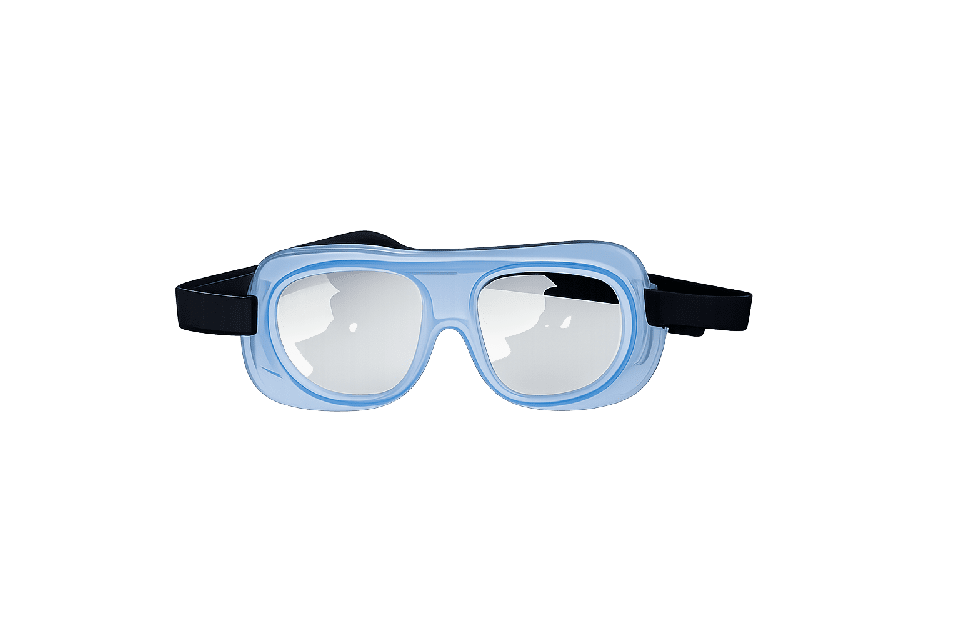
Our 0.5mmPb Wraparound X-Ray Protective Glasses combine transparent lead glass lenses, a close-fitting protective frame and an adjustable elastic head strap to provide an additional shielding barrier against occupational scatter radiation.
The wraparound construction is designed to follow the contours around the eyes, while the retention strap helps maintain the eyewear's position as the wearer moves between clinical tasks.
This makes the product a practical eyewear option for hospitals, interventional departments, imaging facilities and medical radiation-protection purchasing programs.
Protection Highlights
0.5mmPb lead-equivalent protective lenses
Transparent lead glass for clinical visibility
Wraparound frame designed for close eye-area coverage
Adjustable elastic head strap for improved retention
Reusable construction for professional medical use
Suitable for hospital purchasing and medical equipment distribution
B2B Supply: Hospitals | Medical Distributors | Radiation Safety Suppliers | Institutional Procurement
Customer Pain Point
Medical professionals working near X-ray imaging equipment may experience repeated occupational exposure to scattered radiation. Standard eyewear does not provide the same radiation-shielding function as lead-equivalent protective lenses.
Our Solution
The eyewear incorporates 0.5mmPb lead-equivalent glass lenses to provide a protective barrier in front of the eyes.
The surrounding wraparound frame is designed to improve physical coverage around the eye area, although actual radiation protection depends on lens performance, frame geometry, fit and exposure direction.
Customer Pain Point
During procedures involving frequent head movement, repositioning or prolonged activity, eyewear that slips may require repeated adjustment and interrupt workflow.
Our Solution
An adjustable elastic head strap helps retain the protective glasses in position.
The close-fitting frame and strap work together to support a more secure fit, reducing the need for frequent repositioning during applicable clinical tasks.
Customer Pain Point
Scattered X-rays can reach the eye area from different directions. A protective lens positioned only in front of the eyes does not necessarily provide equivalent coverage from the sides or around frame openings.
Our Solution
The wraparound design follows the contours around the eyes to help reduce open spaces associated with some conventional spectacle-style frames.
The degree of peripheral protection should be assessed according to the actual lens coverage, frame design and radiation incidence angle.
Customer Pain Point
Healthcare professionals need to observe monitors, medical instruments, patients and the surrounding procedure environment without unnecessary visual obstruction.
Our Solution
Transparent lead glass lenses allow the wearer to maintain visual access while using protective eyewear.
The design aims to balance eye-area shielding with practical visibility for professional medical environments.
Customer Pain Point
Medical procurement teams must consider product durability, inspection, cleaning and replacement requirements when selecting protective equipment for repeated use.
Our Solution
The reusable frame and lead glass lens construction support ongoing professional use when the product is correctly handled, inspected and maintained.
Facilities should establish appropriate cleaning, storage and inspection procedures to identify lens damage, frame deterioration or changes in fit.
| Parameter | Specification |
|---|---|
| Product Name | Wraparound X-Ray Protective Glasses |
| Product Category | Medical Radiation Protective Eyewear |
| Lens Material | Lead Glass |
| Lead Equivalency | 0.5mmPb |
| Frame Design | Close-Fitting Wraparound Sports Frame |
| Retention System | Adjustable Elastic Head Strap |
| Intended Coverage | Front and Peripheral Eye Area |
| Primary Protection Purpose | Occupational Scatter X-Ray Radiation |
| Optical Design | Transparent Protective Lenses |
| Intended Users | Healthcare and Medical Imaging Professionals |
| Product Type | Reusable Protective Eyewear |
| Typical Working Environments | Hospitals, Cath Labs, Interventional and Imaging Departments |
| Procurement Channels | Institutional and B2B Supply |
Technical Note: 0.5mmPb indicates the stated lead equivalency of the protective lens material under specified testing conditions. It does not mean that the glass itself is physically 0.5mm thick.
Actual attenuation depends on X-ray beam quality, testing conditions and the protective configuration.
The protective lenses use lead glass with a stated lead equivalency of 0.5mmPb.
This specification is relevant to healthcare facilities seeking protective eyewear for personnel working around medical X-ray and fluoroscopy equipment.
Lens shielding should be considered together with frame coverage, workplace exposure conditions and the facility's radiation-protection program.
The close-fitting sports-style frame is designed to sit around the eye area rather than relying solely on a conventional open spectacle configuration.
Its contoured structure supports broader physical coverage around the eyes and may help reduce gaps between the eyewear and the wearer's face.
The actual fit and peripheral coverage should be checked for individual users.
An integrated elastic head strap allows users to adjust the fit according to their head size and wearing preferences.
This feature is particularly useful in environments where professionals frequently change head position or move between different clinical tasks.
The strap helps keep the eyewear positioned without relying only on the frame's contact with the ears.
Lead glass lenses provide a transparent viewing surface while serving as a radiation-shielding component.
The wearer can continue observing clinical displays, equipment and nearby working areas through the protective lenses.
Optical suitability should be evaluated according to the user's visual requirements and institutional purchasing standards.
The product is intended for repeated professional use, subject to correct care and regular inspection.
Before use, check the lenses for cracks, chips or visible damage and examine the frame and retention strap for deterioration.
Damaged eyewear should be removed from service until its suitability has been evaluated.
For medical equipment distributors and institutional buyers, the combination of a defined 0.5mmPb lens specification and an adjustable wraparound design provides a clear basis for product selection.
Bulk-order details, packaging arrangements and any requested private-label services should be confirmed before purchase.
Suitable for consideration by interventional radiologists and supporting clinical personnel working around fluoroscopy-guided diagnostic or therapeutic procedures.
An eyewear option for cardiologists, technicians and other cath lab personnel whose work involves occupational exposure to scattered X-rays.
Can be incorporated into radiation-protection equipment programs for applicable surgical procedures involving mobile C-arm or other fluoroscopic imaging systems.
Designed for medical teams working in procedure environments where close positioning to X-ray imaging equipment makes eye-area protection an important consideration.
Suitable for hospitals and diagnostic imaging facilities evaluating protective eyewear for relevant occupational radiation environments.
A product option for distributors, radiation-protection suppliers and procurement companies serving hospitals and professional medical customers.
Application Notice: These glasses are intended as supplementary protection against occupational scatter radiation. They are not designed to make direct exposure to the primary X-ray beam safe.
They should be used alongside the facility's required shielding, distance-management, dosimetry and other radiation-safety measures.
For radiation protective eyewear, the stated lead equivalency is an important technical purchasing criterion.
The 0.5mmPb specification should be supported by appropriate testing documentation that corresponds to the actual lens material and product configuration being supplied.
Buyers should verify the relevant X-ray beam qualities and testing conditions when reviewing attenuation or lead-equivalency reports.
Quality inspection requirements for procurement orders may include:
Verification of the specified lead glass lens configuration
Inspection for visible lens defects and edge damage
Examination of lens installation and retention
Frame integrity and assembly inspection
Elastic strap attachment and adjustment checks
Visual assessment of the finished eyewear
Verification of product identification and packaging
For institutional or distributor orders, inspection requirements should be agreed upon before shipment.
Where required, buyers may request product identification, order-specific inspection records and documentation supporting the supplied configuration.
The availability and scope of such records should be confirmed with the supplier.
Certification requirements vary according to the destination market, intended use and applicable product classification.
Hospital buyers and distributors should request current documentation for the exact eyewear model rather than relying on certificates issued for unrelated radiation-protection products.
Where applicable, purchasing teams may need to evaluate documentation against relevant protective-eyewear requirements, such as IEC 61331-3, as well as local regulatory obligations.
Important: No specific CE, FDA, ISO or IEC certification is claimed here without supporting documentation for this exact model.
Before finalizing a purchase order, please confirm the availability of:
Lead-equivalency test documentation
Product technical datasheet
Applicable regulatory or conformity documents
Product labeling and traceability information
Inspection and quality records, where available
Packaging and shipment specifications
Documentation availability should be verified before tender submission or commercial commitment.
These glasses are designed to provide an additional shielding barrier against scattered X-ray radiation reaching the eyes during applicable medical procedures.
They form one part of a broader occupational radiation-protection strategy.
The wraparound frame is intended to follow the contours around the eyes, providing closer physical coverage than some open-frame eyewear designs.
Actual protective performance depends on the position and coverage of the lead glass, the frame geometry and the direction of incoming radiation.
The elastic strap helps maintain a stable fit during head movement and clinical activity.
It can be adjusted to accommodate different users and may reduce the need for frequent repositioning.
The wraparound frame is designed to improve coverage around the eye area.
However, side protection should not be assumed to have the same 0.5mmPb shielding performance as the front lenses unless supported by the actual protective construction and relevant test data.
The adjustable retention strap and contoured frame are intended to support stable wearing during clinical activity.
Comfort during prolonged use depends on individual fit, eyewear weight, facial geometry and working conditions. Users should assess suitability before routine extended use.
Whether you are sourcing protective eyewear for a hospital department, expanding a medical radiation-safety product range or preparing an institutional purchasing project, our team can discuss product specifications and commercial requirements.
Contact us for product details, bulk-order quotations, documentation availability and applicable supply options.